RISKNOWLOGY ARTICLES

 risk   All 

Job Safety Analysis (JSA): From Compliance to Culture Transformation

Discover how Job Safety Analysis (JSA) can transform your workplace safety culture. In this comprehensive guide, we explore the JSA process step-by-step, provide practical examples and templates, highlight its benefits and challenges, and show how a proactive approach can drive real change. Safety starts with smart planning — and Risknowlogy is here to help you lead the way.

What Is Event Tree Analysis (ETA)?

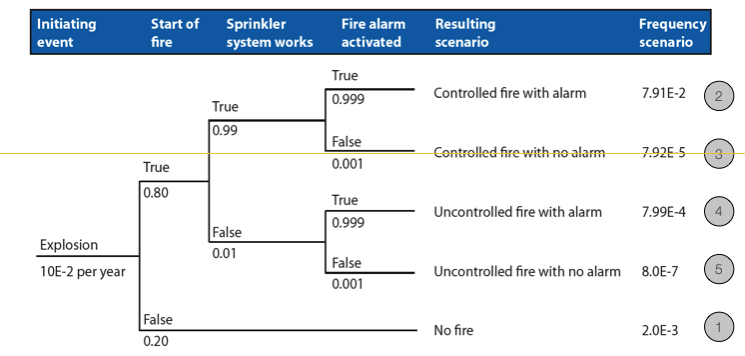
Event Tree Analysis (ETA) is a forward-looking risk assessment tool used to analyze how a single initiating event (like a system fault or external threat) can lead to a variety of possible outcomes — both good and bad.

Certified Specialist: Why We Use This Title

The title "Certified Specialist" is used by Risknowlogy to recognize individuals who successfully complete our theory-based training and pass a certification exam. Unlike terms such as "Engineer" or "Professional," which can imply degrees or job roles, "Certified Specialist" accurately reflects demonstrated knowledge of risk, safety, and reliability topics.

The Markov Technique in Risk, Reliability, and Safety

Safety and reliability analysis often relies on predictive modeling to assess risks and improve system performance. The Markov technique provides a state-based modeling approach that improves the accuracy of risk, reliability, and safety assessments. This article explores how Markov models work, their applications, and key advantages in industries where failure prevention is critical.

HAZOP Technique

HAZOP (Hazard and Operability Study) is a systematic risk assessment technique used to identify potential hazards and operability issues in complex systems, particularly in process industries like chemical, oil & gas, and pharmaceuticals. It is a structured and qualitative method that involves a multidisciplinary team analyzing deviations from the intended design by applying guide words to process parameters.

HAZID Technique

Hazard Identification (HAZID) is a proactive safety analysis tool designed to identify potential hazards, both internal and external, across various project phases. External hazards—those originating outside the process—are a key focus of HAZID, encompassing events like natural disasters, security breaches, and external fires. By evaluating these alongside internal risks, HAZID ensures a holistic approach to hazard management, contributing to safer operations and regulatory compliance.
We use cookies
Cookie preferences
Below you may find information about the purposes for which we and our partners use cookies and process data. You can exercise your preferences for processing, and/or see details on our partners' websites.
Analytical cookies Disable all
Functional cookies
Other cookies
We use cookies to personalize content and ads, to provide social media features and to analyze our traffic. Learn more about our cookie policy.
Accept all Decline all Change preferences
Cookies